
Why migration to Australia is reshaping multi-residential design
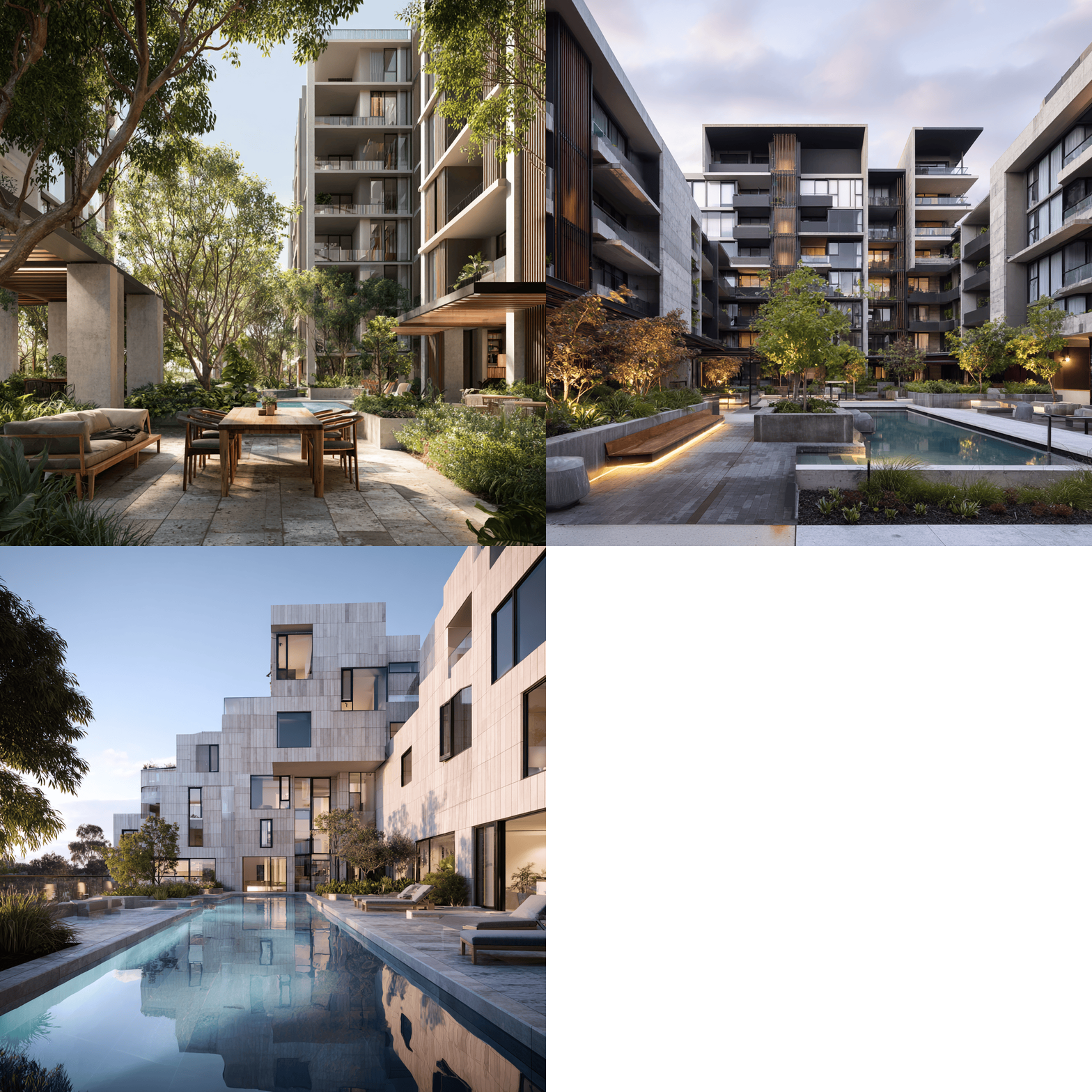
Why migration to Australia is reshaping multi-residential design
Migration to Australia is often discussed in numbers — visas, population growth, pressure on housing supply. What’s less visible is how migration quietly reshapes what people expect home to feel like, not just how many homes are needed.
Australia continues to attract people from places like Singapore, Hong Kong, Europe, Russia, and India — but the nature of this migration has shifted. This isn’t short-term relocation driven purely by career opportunity or temporary assignment. It’s a deliberate move toward stability, wellbeing, space, and long-term living.
For many of these buyers and renters, multi-residential living isn’t a compromise — it’s a conscious choice. But that choice comes with expectations shaped by the homes, hotels, neighbourhoods, and cities they’ve lived in globally. They aren’t trying to recreate where they came from. They’re carrying lived experience with them.
That experience subtly influences what feels “right”: apartments that feel calm rather than compressed, layouts that support daily rituals rather than just efficiency, materials that age well and feel tactile, not overly styled. It also shows up in how shared spaces are perceived — whether they feel performative and transactional, or genuinely designed to support everyday community.
Often, this plays out through quieter planning decisions: deeper thresholds, better acoustic separation, generous storage, thoughtful lighting, and materials chosen as much for touch and comfort as for visual impact. These details shape not just how an apartment looks, but how it supports emotional regulation, privacy, and ease.
In this context, multi-residential design is no longer just about maximising yield or meeting benchmarks. It’s about creating environments that support emotional settling — places people choose to stay in, not trade out of.
Emotional settling doesn’t happen in isolation. It’s shaped by how easily people feel a sense of belonging — through shared spaces, informal encounters, and the ability to form everyday community beyond the front door. The quality of these in-between spaces increasingly defines whether a building feels transient or grounded.
This is where global design intelligence becomes highly relevant.
Global design isn’t about importing aesthetics. It’s about understanding how people live across cultures — how light, materiality, sound, and spatial flow shape daily experience. When translated thoughtfully, multi-residential projects can feel refined without being generic, and distinctly Australian without feeling under-designed.
What’s often overlooked is that globally mobile buyers don’t just assess the apartment — they assess the thinking behind it. They’re instinctively drawn to teams that combine international exposure with strong local delivery, signalling confidence, cultural awareness, and the ability to translate global expectations into spaces that work here — climatically, socially, and commercially.
Having lived and worked across India, Singapore, and now Australia, I see this translation as one of the most valuable roles design can play today: bridging global lived experience with local execution.
Migration isn’t just shaping demand. It’s reshaping how quality, longevity, liveability — and community — are defined. And the projects that recognise this, in both design thinking and team composition, are the ones people don’t just move into, but quietly build their lives around.